
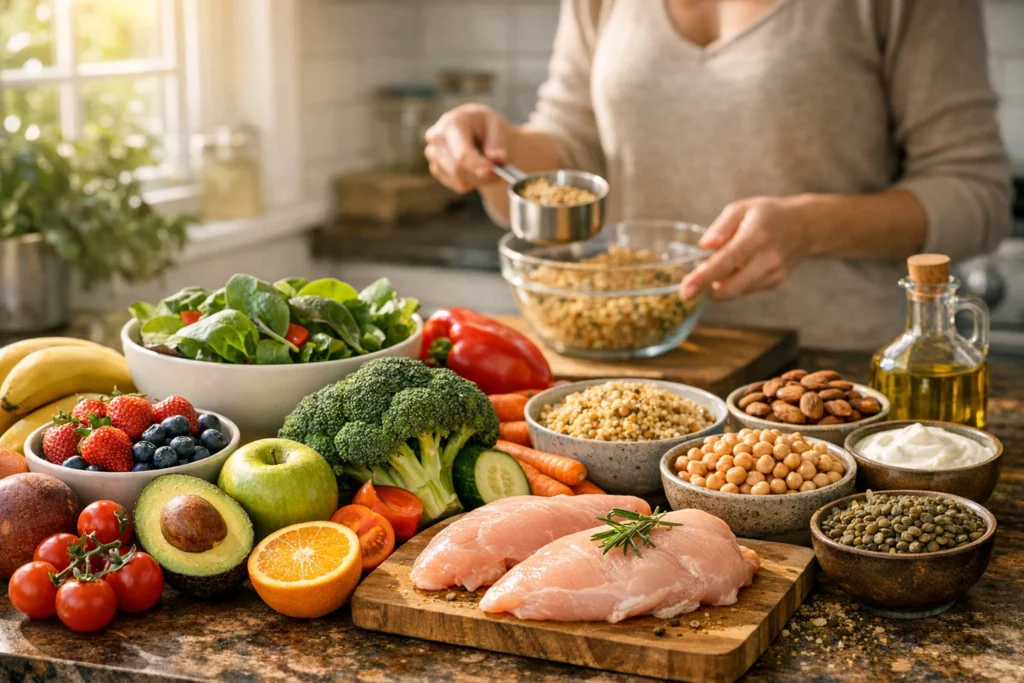
Nobody at your pre-op appointment is going to talk to you about what to eat before surgery. The clinic will tell you what to stop, what to avoid, what not to take. That is the entire nutritional briefing for most patients. But what you eat in the month before a cosmetic procedure matters, and it matters in ways that directly affect how your body handles the physical trauma of surgery and how quickly it repairs itself afterward.
Quick Answer
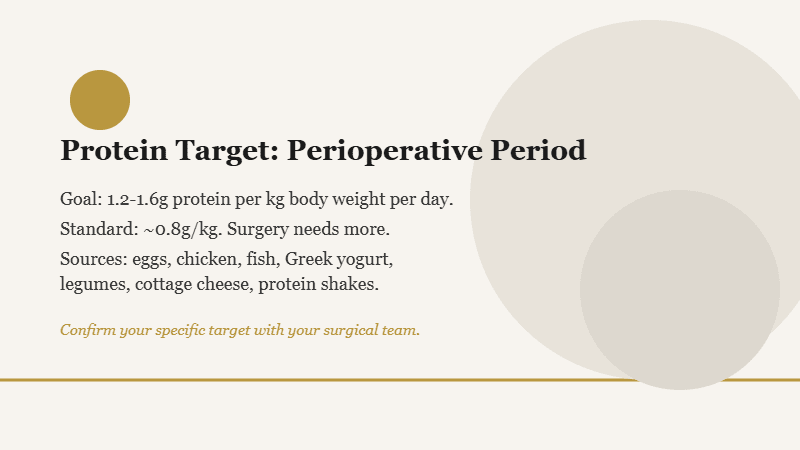
Protein is the single most important pre-surgical nutritional variable. Your body needs it for wound healing, collagen synthesis, and immune function. Most people undereat it. The goal for the perioperative period is roughly 1.2-1.6g per kilogram of body weight per day, but confirm your specific target with your surgical team. Crash-dieting before a body contouring procedure is actively counterproductive.
Looking for a quick answer? Jump to the FAQ below.
Why Pre-Surgery Nutrition Matters
Surgery is controlled trauma. Your body’s job after the incision closes is to build new collagen at the wound site, fight off potential infection, maintain blood volume, and run the inflammatory cascade that is actually how healing happens. Every one of those processes runs on nutritional raw materials. If those reserves are depleted going into surgery, the body has less to work with when it matters most.
Patients who are well-nourished going into surgery heal faster, with fewer complications, and with better outcomes at the tissue level. This is not wellness advice. It is how surgical recovery physiology works.
The month before your procedure is the window. Not the morning before, not the week before. Protein and micronutrient stores are built over weeks, not days. Starting to focus on nutrition the night before surgery is like trying to hydrate for a marathon by drinking water at the starting line.
Protein: The Variable That Matters Most
Protein is required for collagen synthesis, which is how your body rebuilds tissue at incision sites. It is also required for immune cell production, tissue repair, and the formation of new blood vessels in healing tissue. Without adequate protein, the healing process is slower and more fragile.
Most adults eat around 0.8 grams of protein per kilogram of body weight per day, which is the minimum for general health maintenance. The perioperative target is significantly higher, commonly cited in the range of 1.2-1.6g/kg/day. For a 70kg person, that is roughly 84-112 grams of protein per day instead of the standard 56 grams. Confirm your specific target with your surgical team, since individual needs vary by procedure, body composition, and existing health status.
Practical sources: eggs (about 6 grams each), chicken breast (around 25-30 grams per 100g), fish (similar), Greek yogurt (15-20 grams per serving), cottage cheese, legumes, and protein shakes. Protein shakes are a legitimate way to close the gap if whole food intake is insufficient. Look for unflavored or lightly flavored options without excessive additives.
What’s Normal
- Some swelling and bruising for 1-4 weeks, depending on the procedure
- Reduced appetite immediately post-surgery due to anesthesia and medications
- Fatigue for 1-3 weeks; the body is using energy for healing
- Gradual improvement in wound site appearance over 4-8 weeks
When to Call
- Fever above 101°F (38.3°C) in the first week post-op
- Increasing redness, warmth, or swelling at incision sites after day 3
- Wound edges separating or significant discharge beyond light oozing
- Inability to eat or drink for more than 24 hours post-surgery
Key Micronutrients: What to Prioritize Through Food
Three micronutrients deserve specific attention in the month before surgery, not as supplements to buy, but as nutrients to actively seek through food.
Vitamin C is a cofactor for the enzymes that produce collagen. Without it, the collagen synthesis process stalls. Your body cannot store large amounts of vitamin C, so consistent daily intake matters more than occasional mega-doses. Sources: citrus fruits, strawberries, bell peppers (particularly red peppers, which have more vitamin C than oranges per gram), broccoli. Eating a bell pepper or a couple of oranges daily in the month before surgery is more useful than buying a supplement and forgetting to take it.
Zinc supports immune function and wound healing. Deficiency is associated with impaired healing, and it is more common than most people realize, particularly in patients who eat limited animal products. Sources: red meat, shellfish (oysters are particularly dense), pumpkin seeds, legumes, whole grains.
Iron supports oxygen delivery to healing tissue. This matters most for larger procedures like tummy tucks that involve more blood loss. Patients who are borderline iron-deficient before surgery may have more difficulty healing. Sources: red meat, chicken liver, legumes, leafy greens (paired with vitamin C to improve absorption). If you think you may be iron-deficient, get a blood test before surgery, not a supplement, because supplementing without knowing your levels can cause other issues.
| Timeframe Before Surgery | Nutritional Focus |
|---|---|
| 4-6 weeks out | Build protein intake to perioperative target (1.2-1.6g/kg/day); prioritize whole foods |
| 4 weeks out | Add consistent vitamin C sources daily; ensure zinc-rich foods in rotation |
| 2 weeks out | Eliminate or significantly reduce alcohol; reduce ultra-processed foods and refined sugars |
| 1 week out | Maintain protein intake; reduce high-sodium foods to manage post-surgical swelling |
| Night before | Normal meal, nothing excessive; follow surgeon’s fasting instructions beginning at specified time |
| Day of surgery | Follow fasting instructions exactly; nothing by mouth after specified cutoff |
What to Reduce or Avoid
The other side of pre-surgical nutrition is reducing things that actively impair healing. Ultra-processed foods high in refined sugars and industrial seed oils drive systemic inflammation. That is not a wellness platitude; it is a physiological reality that affects the inflammatory environment the body heals in. This does not mean perfection. It means consistently better eating for four to six weeks, not a flawless diet.
Alcohol impairs liver function, affects immune response, and impairs wound healing. Pre-operative alcohol abstinence is standard surgical guidance for good reason. Aim to stop two weeks before your procedure, or as specifically directed by your surgical team.
Excess sodium worsens post-surgical swelling. The body is already managing fluid shifts after surgery; coming in with a high-sodium baseline makes this harder. In the two weeks before surgery, reducing obviously salty processed foods is worthwhile.
The Crash-Diet Trap
Patients booked for liposuction or tummy tuck sometimes try to lose as much weight as possible before their procedure, thinking it will improve their results or make the surgery easier. It does neither, and it actively undermines healing. Rapid weight loss depletes protein stores and micronutrient reserves at exactly the moment when the body needs them most. Surgeons operate on the body as it presents at surgery. The result you get from liposuction is shaped by the fat architecture present on the day of the procedure, not on the day you booked the appointment.
If you are tempted to restrict before surgery, read the post-lipo nutrition guide first. The nutritional strategy that supports recovery starts before surgery, not after.
A Note on Fasting Instructions
Your surgeon will give you specific instructions about when to stop eating and drinking before surgery, typically approximately eight hours before your procedure for general anesthesia, though the exact timing varies by procedure and anesthesiologist. These instructions exist for anesthesia safety and they are non-negotiable. Nothing by mouth after the specified cutoff time, including water.
These fasting instructions are separate from pre-surgical nutrition. Pre-surgical nutrition refers to the weeks before. Fasting refers to the final hours. They are different things with different purposes. The weeks before are when you build your reserves. The hours before are when you follow the anesthesia protocol. Both matter.
For more on the pre-care picture, including what medications and supplements to stop before your procedure, the pre-op supplement and medication guide covers that in detail. For what comes after, the tummy tuck recovery guide includes the post-operative nutrition context for larger procedures.
FAQ
How much protein do I need before cosmetic surgery?
The perioperative target cited in most surgical nutrition guidance is roughly 1.2-1.6 grams of protein per kilogram of body weight per day, which is significantly higher than the standard daily recommendation. This works out to 84-112 grams per day for a 70kg person. Confirm your specific target with your surgical team, since individual needs vary. Protein shakes are a practical way to close the gap if whole food intake falls short.
Should I diet before liposuction?
No, and specifically not by crash-dieting. Rapid weight loss before a body contouring procedure depletes the protein and micronutrient stores your body needs for healing. Surgeons operate on the body as it presents at surgery. The result from liposuction depends on the fat architecture present on the day of the procedure, not on how much weight you lost in the weeks before. Focus on eating well, not eating less.
What vitamins should I take before cosmetic surgery?
The priority is food sources rather than supplements: vitamin C (citrus, bell peppers, strawberries) for collagen synthesis support, zinc (meat, shellfish, seeds, legumes) for immune function and wound healing, and adequate iron if you are having a larger procedure. Supplements are worth discussing with your surgical team if your diet has specific gaps, but a whole-food approach to these micronutrients over the month before surgery is the most reliable baseline. Do not start any new supplement regimen without checking the pre-op stop list with your surgeon first.
Nutrition in the weeks before surgery works alongside home preparation as part of complete pre-surgical planning, with both areas deserving dedicated attention in the weeks before your procedure date.
Of the supplements worth considering alongside nutritional preparation, collagen peptides are the specific supplement with the strongest evidence base for the peri-surgical period — the clinical support for hydrolyzed collagen at 10-15g daily is more robust than most supplement evidence.
This article is for educational purposes only and is not a substitute for professional medical advice. Always follow your injector’s or surgeon’s specific aftercare instructions.