
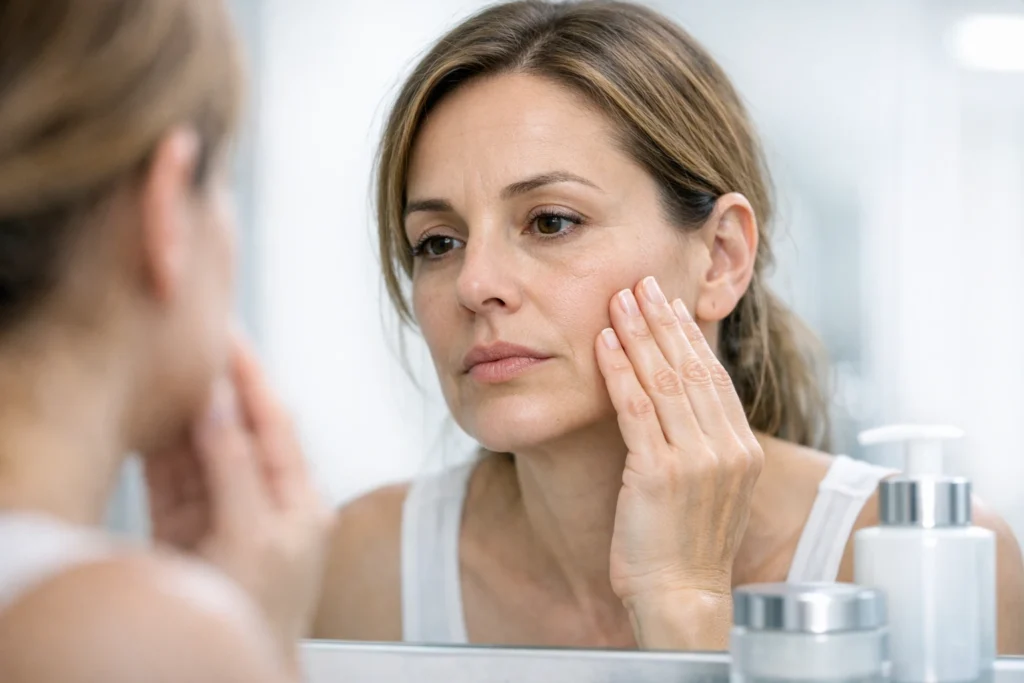
Most of the coverage comparing tirzepatide and semaglutide focuses on which drug produces more weight loss. That is a medically important question, and it belongs with the prescribing doctor. For patients who are also thinking about their appearance during and after treatment, a different comparison matters: how do the aesthetic side effects differ? That question gets much less attention, and this article maps the terrain of both.
To be clear at the outset: nothing in this article is a reason to adjust, pause, switch, or stop either medication. Every aesthetic side effect discussed here is something to bring to both your prescribing provider and your aesthetic provider. Medication decisions are not made based on aesthetic concerns. They belong with the prescribing doctor.
With that in place: patients on these medications deserve honest information about the tirzepatide vs semaglutide aesthetic effects, including what the research actually shows and what varies by individual.
Jump to the FAQ section if you want the quick answers first.
Quick Answer
Both drugs are associated with facial volume loss, skin laxity, hair shedding, and injection site reactions. Because tirzepatide produces greater average weight loss than semaglutide, the aesthetic changes linked to weight loss magnitude (facial volume, skin laxity, hair shedding) may be more pronounced with tirzepatide in some patients. These are secondary effects of weight loss, not direct drug toxicities. Discuss all aesthetic concerns with both your prescribing provider and your aesthetic provider.
The Mechanism Difference: Why Weight Loss Magnitude Matters
Semaglutide is a GLP-1 receptor agonist. Tirzepatide adds GIP receptor agonism, making it a dual agonist. The dual mechanism generally produces greater weight loss than semaglutide, a finding that is consistent across head-to-head comparisons and meta-analyses in the published literature.
From an aesthetic standpoint, greater weight loss means potentially more pronounced aesthetic changes from fat redistribution and loss. The face loses volume. Skin that was stretched by fat has less structural support. Hair follicles, stressed by rapid caloric restriction and weight change, shed at higher rates. None of these are direct pharmacologic effects of the drugs on these tissues; they are secondary consequences of weight loss magnitude and speed. That distinction matters because it means the aesthetic profile of each drug tracks closely with how much and how fast weight is lost.
Facial Volume Loss: “Ozempic Face” on Both Drugs
Facial volume loss, the phenomenon that has been called “Ozempic face” in popular coverage, occurs with both drugs. It is not a direct pharmacologic effect on the face; it is the result of overall fat reduction affecting facial fat compartments. The face loses volume the same way the rest of the body does.
Because tirzepatide typically produces greater total body weight loss than semaglutide, patients on tirzepatide may experience more pronounced facial volume changes than those on semaglutide at comparable timeframes. A published review in the dermatology literature, drawing on clinical trial data and pharmacovigilance sources, noted that tirzepatide’s weight-loss-induced facial volume changes warrant cautious interpretation, though individual responses vary significantly. Factors including baseline facial fat, age, rate of weight loss, and starting weight all affect what a specific patient experiences.
Aesthetic options for addressing facial volume loss include filler and skin-tightening treatments. Timing matters here. Most aesthetic providers recommend waiting until weight has been stable for several months before pursuing filler, because the face continues changing during active weight loss. A result achieved during rapid weight loss may look different six months later when the weight has stabilized. This is a conversation for the aesthetic provider, not a reason to change the medication.
For a dedicated overview of the facial volume changes associated with GLP-1 use, see the Ozempic face guide.
| Aesthetic Concern | Semaglutide | Tirzepatide | Mechanism |
|---|---|---|---|
| Facial volume loss | Associated | Associated; potentially more pronounced due to greater weight loss | Secondary to fat loss, not direct drug effect |
| Skin laxity | Associated with rapid weight loss | Associated; may be more significant with greater/faster weight loss | Collagen synthesis and elasticity changes from fat loss and adipokine shifts |
| Hair shedding | Associated (telogen effluvium) | Associated (telogen effluvium); may correlate with greater weight loss | Stress response to rapid weight loss and caloric restriction, not direct drug effect |
| Injection site reactions | Present; rates comparable to other GLP-1 drugs | Present; published trial data shows rates comparable to semaglutide | Local inflammatory response at injection site |
Skin Laxity: The Collagen and Elasticity Connection
Rapid weight loss from either drug can affect collagen synthesis, skin elasticity, and dermal structure. Published research notes that GLP-1 drug-induced fat loss can alter adipokine levels and inflammatory responses that impact skin elasticity. Adipokines are signaling proteins produced by fat tissue that play a role in skin health; as fat mass decreases rapidly, these signals change.
The degree of skin laxity that results from weight loss on these drugs varies significantly by age (older skin has less elasticity to begin with), skin quality, genetics, how quickly weight is lost, and total weight lost. This means tirzepatide’s higher average weight loss carries a higher potential for visible skin changes in some patients, but it is not a uniform finding.
Patients concerned about skin laxity during or after GLP-1 treatment should discuss this with their aesthetic provider. Skin-tightening treatments are a consideration, and timing relative to active weight loss matters. For a detailed overview of what the options look like, see the skin laxity after GLP-1 weight loss guide.

Hair Loss: Telogen Effluvium on Both Drugs
Hair loss associated with both semaglutide and tirzepatide has been identified in published cohort studies and pharmacovigilance analyses, including data from FDA adverse event reporting. The proposed mechanism is telogen effluvium: a temporary shedding phase triggered by the physiologic stress of rapid weight loss and significant caloric restriction, rather than a direct toxic effect of the drug on hair follicles.
Telogen effluvium typically appears two to four months after the triggering stress, which is why hair loss often shows up several months into treatment rather than immediately. Because the trigger is weight loss magnitude and speed rather than the drug itself, tirzepatide’s higher average weight loss may correlate with more pronounced shedding in some patients. This is not a settled finding; individual variation is significant.
The reassuring news is that telogen effluvium is temporary. Hair regrowth generally follows once the acute weight-loss phase stabilizes and the body adjusts. For patients concerned about hair changes during treatment, discussing the timing and any supportive options with both the prescribing provider and a dermatologist is appropriate.
For more on what the research shows about hair loss on these drugs specifically, see the hair loss on semaglutide and tirzepatide guide.
Injection Site Reactions: Localized and Temporary
Both drugs can cause localized injection site reactions: redness, swelling, and tenderness at the site of injection. Published data from the SURPASS clinical trial program shows that injection site reactions with tirzepatide occurred at rates comparable to other GLP-1 receptor agonists including semaglutide. These reactions are generally mild, localized, and resolve on their own.
Rotating injection sites reduces the risk of localized tissue changes at any single location. This applies to both drugs. Any persistent or worsening reaction at an injection site should be discussed with the prescribing provider.
What to Discuss with Your Providers
The practical guidance for patients navigating aesthetic concerns during GLP-1 treatment is the same regardless of which drug they are on.
With the prescribing provider: flag any concerns about facial volume changes, hair shedding, or skin laxity. GI symptoms are the most common complaint on both drugs, and knowing normal vs call-now GI symptoms matters just as much as tracking aesthetic changes. The prescribing provider understands the full medical picture and may have context about the rate of weight loss or other factors that are relevant. Do not adjust, pause, or stop the medication based on aesthetic concerns without this conversation.
With the aesthetic provider: raise the timeline question for any cosmetic treatments you are considering. Timing cosmetic treatments during active weight loss is generally not recommended because the face continues changing. A stable weight for several months before filler or skin-tightening treatment produces more predictable results. Most aesthetic providers who work with GLP-1 patients recommend waiting until weight has stabilized before pursuing significant filler work or body contouring procedures.
Both conversations are important. Neither replaces the other.
FAQ
Does tirzepatide cause more “Ozempic face” than semaglutide?
It may, in some patients. Because tirzepatide produces greater average weight loss than semaglutide across published studies, the fat loss that drives facial volume changes may be more pronounced on tirzepatide. A published review in dermatology specifically noted that tirzepatide’s weight-loss-induced facial volume changes warrant cautious interpretation. However, individual responses vary significantly based on starting weight, rate of weight loss, age, and facial structure. This is not a reason to change medication; it is information to bring to both your prescribing provider and your aesthetic provider.
Will my hair grow back after shedding on these drugs?
For most patients, yes. The hair loss associated with both semaglutide and tirzepatide is classified as telogen effluvium, a temporary shedding response to physiologic stress from rapid weight loss and caloric restriction. It is not a permanent change to the hair follicle. Regrowth generally follows once the body adjusts and the acute weight-loss phase stabilizes. If shedding is significant or persistent, discussing it with a dermatologist alongside the prescribing provider is appropriate.
When is it safe to get filler while on a GLP-1 medication?
Most aesthetic providers recommend waiting until weight has been stable for at least several months before pursuing filler or other volume-restoring treatments. The reason is that facial volume continues changing during active weight loss, which means a filler result achieved during that period may look different once weight stabilizes. This is a discussion for your aesthetic provider, not a decision that requires changing the medication. Bring the question to the consultation with full context about how long you have been on the drug and your current weight trajectory.
This article is for educational purposes only and is not a substitute for professional medical advice. Always follow your injector’s or surgeon’s specific aftercare instructions.