
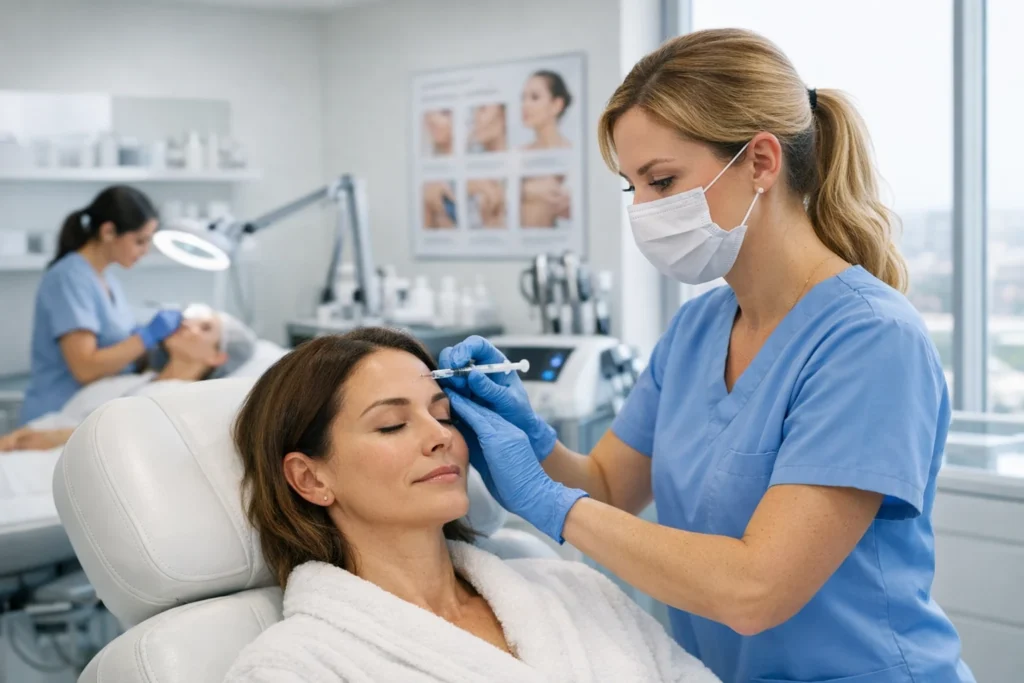
Every December, a fresh crop of “trends to watch” articles shows up, built almost entirely on press releases from device makers and quotes from injectors with something new to sell. None of it comes from actual procedure volume. So here is a most popular cosmetic procedures 2026 ranking built from a different source: how many people actually paid for and underwent each treatment in 2024, the most recent year with real reported data.
The gap between that list and the trend pieces is bigger than you’d expect. What’s dominating your feed right now is not, in most cases, what millions of people are actually choosing. Some of what looks like a sudden boom is marketing catching up to something that’s been building for years. Some of what looks stagnant is actually growing steadily underneath the noise.
This ranking sorts fact from momentum from noise, using our full recovery data page as the source for every figure below.
Want the short version first? Jump to the FAQ.
Quick answer: Neuromodulators (Botox and similar injectables) remain the single most-performed cosmetic treatment in the US, and liposuction is the top surgical procedure for the third year running. Skin resurfacing is the fastest-growing minimally invasive category. The defining story of 2026 is GLP-1 medication reshaping demand for body and facial procedures. Regenerative treatments like PDRN and exosomes are generating buzz well ahead of the long-term evidence.
The Most Popular Cosmetic Procedures in 2026, Ranked by Real Volume
Here is where the numbers actually land, using 2024 data from the ASPS Procedural Statistics Report and the ISAPS Global Survey, the same sources behind our stats page.
| Rank | Procedure | 2024 Volume | What’s Driving It |
|---|---|---|---|
| 1 | Neuromodulators (Botox, Dysport, etc.) | 9,883,711 (US) | Fast, low-cost, essentially no downtime |
| 2 | HA Dermal Fillers | 5,331,426 (US) | Same appeal as neuromodulators, longer-lasting results |
| 3 | Skin Resurfacing (laser, chemical peel, microdermabrasion) | 3,703,305 (US) | Fastest-growing minimally invasive category, up 6% year over year |
| 4 | Skin Treatments (laser hair removal, IPL, tattoo removal) | 3,112,056 (US) | Steady, unglamorous, ongoing demand |
| 5 | Lip Augmentation (injectable) | 1,449,565 (US) | Low commitment, quick correction |
| 6 | Liposuction | 349,728 (US) | Top surgical procedure for the third straight year |
| 7 | Breast Augmentation | ~304,000 (US) | Still the second most common surgery, holding steady |
| 8 | Tummy Tuck | ~148,000 (US) | Rising alongside GLP-1 driven weight loss |
| 9 | Rhinoplasty | ~1 million (global, ISAPS) | Strong global demand even as volume slipped 10% year over year |
| 10 | Blepharoplasty | #1 facial surgery in the US; overtook liposuction globally | Facial skin laxity tied to GLP-1 weight loss cited as a factor |
Notice what’s missing from the top of that list: anything most people would call a 2026 “trend.” The procedures actually moving in volume are the reliable ones. Botox. Filler. Liposuction. The same stuff everyone has been doing for a decade, just more of it.
What’s Actually Growing: The GLP-1 Effect
The single most useful number on our stats page for understanding where this is all headed might be this one: 837,485 patients seen by ASPS member surgeons in 2024 were taking GLP-1 weight loss medications. Twenty percent of them had already had plastic surgery related to their weight loss. Forty-one percent were considering a non-surgical procedure. That’s not a niche trend. That’s a demand shift working its way through nearly every category on the list above.
Facial skin laxity from rapid weight loss is cited as a contributing factor in blepharoplasty overtaking liposuction as the world’s most common surgical procedure. Body skin laxity is doing something similar to tummy tuck and body lift volume. If you’re researching tummy tuck recovery right now, there’s a decent chance GLP-1 weight loss brought you here, and you’re part of the real 2026 trend, not the marketing version of it.
The skin laxity itself, and what your actual options for treating it look like, is a big enough topic to deserve its own read. It doesn’t fit neatly into a rankings article.
The Regenerative Wave: Real Momentum, Thin Evidence
Ask any injector what they’re excited about right now and you’ll hear the same handful of terms: PDRN, exosomes, polynucleotides, microtox. These are marketed as the next generation of skin quality treatments, working on a cellular level instead of simply filling or paralyzing. The interest is real. Clinics are adding them to menus quickly, patients are requesting them by name, and the before-and-afters look compelling.
The evidence is not there yet, at least not at the depth you’d want before spending money on something new. Long-term outcome data is thin. Regulatory clarity on some of these treatments, exosomes especially, is still developing in the US.
None of that makes them fake or dangerous. It makes them early. Early is a fine place to be if you understand that’s where you are. It’s a worse place to be if a clinic’s marketing has convinced you that you’re getting a proven treatment with decades of research behind it, when what you’re actually getting is an educated bet.
What the Trend Pieces Won’t Tell You: Recovery Has a Price Tag
Every procedure on the ranking above has a recovery attached to it, and recovery is not free. A liposuction patient who follows aftercare recommendations fully, including both stages of compression garments, foam, and a full course of professional lymphatic massage, can expect to spend somewhere between $1,200 and $2,640 on recovery alone. That figure does not appear in any procedure quote. It doesn’t appear in trend articles either, because “budget over a thousand dollars just to heal correctly” doesn’t make for exciting content.
Multiply that gap by every procedure on this list and you start to understand why so many people feel blindsided by the real cost of a decision they made partly because something was popular.
Trending Is Not the Same as Right for You
Here’s the uncomfortable part. A procedure trending upward tells you something about aggregate demand. It tells you nothing about whether your anatomy, your healing tendencies, your job, your support system at home, or your tolerance for weeks in a compression garment make it a good fit for you specifically.
People who choose a procedure mainly because it’s having a moment are disproportionately represented in the complications conversations that patients have with each other after the fact. Not because the procedure is inherently riskier. Because fit and recovery tolerance got skipped in favor of momentum. A rising trend line is not a recommendation. It’s a headcount.
FAQ
Is Botox really more popular than any surgical procedure?
Yes, by a wide margin. Neuromodulator injections numbered 9.88 million in the US in 2024, dwarfing any single surgical category. The appeal is straightforward: minimal downtime and a same-day return to normal activities, which our stats page identifies as the primary driver behind the entire injectables category.
Are exosomes and PDRN treatments safe?
They’re generating real interest from patients and injectors, but the long-term evidence base is still thin. That isn’t the same as unsafe, but it’s a good reason to ask detailed questions before treating something new as a sure thing.
Why does liposuction keep outranking newer procedures?
Liposuction has held the top surgical spot for three consecutive years because it works, plastic surgeons are skilled at performing it, and it applies to more body areas and patient goals than newer, narrower treatments.
This ranking is refreshed annually when new ASPS data is released.
This article is for educational purposes only and is not a substitute for professional medical advice. Always follow your injector’s or surgeon’s specific aftercare instructions.