
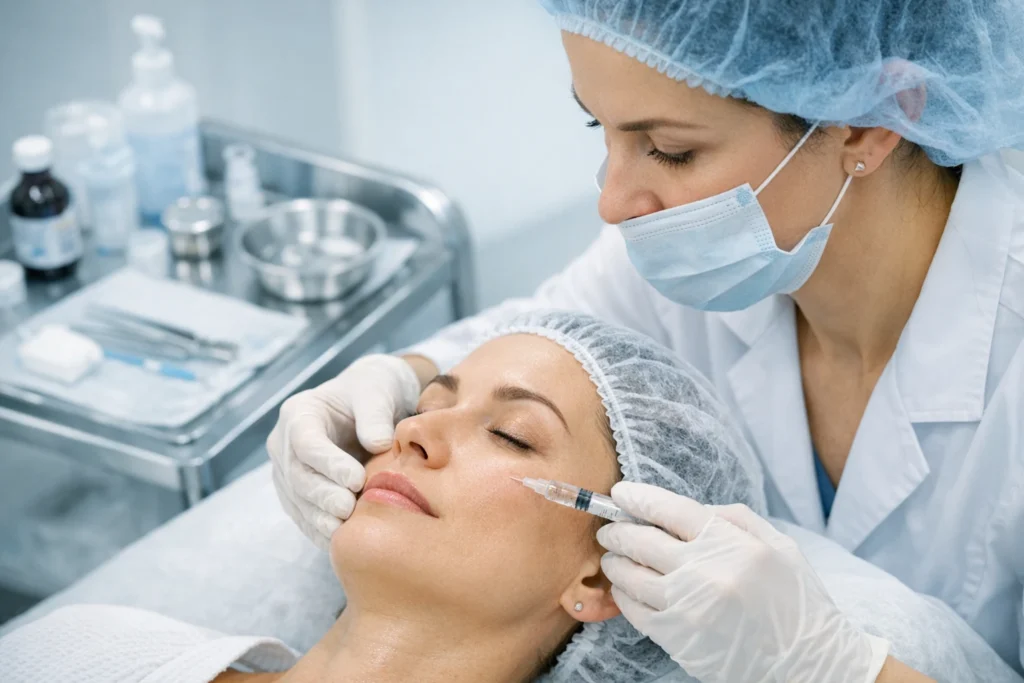
Somewhere between your dermatologist’s office and your Instagram feed, a vial labeled PDRN promises to do what retinol, vitamin C, and microneedling apparently could not. The claims stack up fast: skin repair, collagen stimulation, an almost regenerative glow, all from an ingredient most people cannot pronounce and few can explain. Salmon DNA sounds like it belongs in a lab, not a syringe, and that gap between what the ingredient actually is and what it is being sold as is exactly where PDRN and salmon DNA get interesting.
What PDRN and Salmon DNA Injectables Actually Are
PDRN stands for polydeoxyribonucleotide, a fragment of DNA originally extracted from salmon or trout sperm cells and purified for medical use. It has a real clinical history outside of aesthetics, used in wound healing and tissue repair settings in some countries for years before skincare marketing found it. The aesthetic version is typically injected into the skin, either on its own or alongside other skin booster ingredients, with the stated goal of improving skin quality rather than adding volume the way a dermal filler does.
Salmon DNA and PDRN are often used interchangeably in marketing, though the purified fragment used in injectables is processed well beyond anything resembling fish tissue. That distinction matters for anyone with a shellfish or fish allergy, and it is a question worth asking a provider directly rather than assuming based on the name alone.
What the Research Actually Supports
The evidence base for PDRN in wound healing and tissue repair is genuinely older and more established than most injectable trends get to claim. Its use in skin rejuvenation specifically is newer, with smaller clinical studies showing improvements in skin hydration, elasticity, and texture over several weeks of treatment. That is a real signal, not nothing, and it separates PDRN from ingredients that have essentially no clinical backing at all.
It is also a long way from proving the more dramatic anti-aging claims attached to it in marketing material. The studies that exist tend to be smaller, shorter, and less rigorously controlled than what would be needed to settle the bigger questions, and most were not designed to test the specific claims a brand might put on a landing page.
Where the Marketing Gets Ahead of the Science
Somewhere between the clinical literature and the sales page, PDRN and salmon DNA extracts turned into buzzwords attached to almost any claim a brand wanted to make. Regeneration, cellular renewal, and reversal of aging are common phrases, and none of them have the same evidence behind them as the more modest, boring claim that skin quality and hydration can improve with consistent treatment.
This is a familiar pattern in aesthetics, where a real but limited finding gets stretched to cover claims it was never designed to support. A provider’s enthusiasm, or a glowing before-and-after photo, is not the same thing as a clinical trial, and it is worth asking any provider what specific outcome the evidence actually supports before you commit to a treatment plan.
How This Fits Into the Broader Peptide and Skin Booster Trend
PDRN did not appear in isolation. It arrived alongside a wider wave of peptide and skin booster treatments, the same wave that includes copper peptides used around microneedling and questions about how newer compounds like retatrutide affect skin and aesthetics. If you are already using copper peptides after microneedling, the honest comparison is that PDRN works through a different mechanism and is not a straightforward upgrade or replacement, just a different tool with its own separate evidence base.
Anyone curious about where the broader injectable landscape is heading might also find it useful to read about retatrutide’s skin and aesthetic side effects, since the same evidence-versus-marketing gap shows up there too, just with a different ingredient and a different set of claims to sort through.
None of this means every peptide trend deserves the same level of skepticism. It means the useful question is always the same one: what does the evidence say this specific ingredient does, at what dose, in what population, and how does that compare to what the provider or the ad is actually claiming. PDRN happens to have a more defensible starting point than most, which is exactly why it is worth separating the real signal from the noise instead of dismissing it outright or accepting every claim at face value.
Aftercare If You Have Already Had It Done
If you have already had a PDRN or salmon DNA treatment, the aftercare is closer to what you would expect from microneedling than from a dermal filler. Mild redness, swelling, and small injection marks are typical in the first day or two. The first 24 hours of microneedling aftercare guide covers the same basic skin-protection rules that apply here, including avoiding harsh actives and unnecessary sun exposure while the skin settles.
Do not attempt to source, dose, or administer any of these compounds yourself. Whatever combination of treatments you are considering, that decision and the actual injection belong with a licensed provider, not a kit ordered online.
Normal vs Not Normal
Most reactions after a PDRN or skin booster session are mild and short-lived, but a few signs mean you should contact your provider rather than wait it out.
| Normal | Not Normal |
| Mild redness or small bumps at injection points for a day or two | Redness or swelling that gets worse after 48 hours instead of better |
| Slight bruising or tenderness at injection sites | Fever, spreading warmth, or pus at any injection point |
| Temporary dryness or flaking as skin adjusts | Hard lumps that do not soften over several weeks |
Frequently Asked Questions
Is PDRN the same thing as a dermal filler?
No. Fillers add volume and hold their shape in the skin, while PDRN is meant to work on skin quality, hydration, and texture rather than shape. Some providers use both in the same treatment plan, but they are solving different problems and one is not a substitute for the other.
Can I combine PDRN with microneedling or other peptide treatments?
Providers do sometimes combine these treatments, but there is limited data on optimal timing or spacing between sessions. This is a question to ask your provider directly rather than something to plan out yourself, especially if you are also using other actives or peptide treatments at home.
Does salmon DNA mean there is an allergy risk?
It is a reasonable question, since the source material starts as fish tissue even though it is purified well beyond that point for medical use. If you have a known fish or shellfish allergy, mention it to your provider before treatment rather than assuming the purification process makes it a non-issue.
This article is for educational purposes only and is not a substitute for professional medical advice. Always follow your injector’s or surgeon’s specific aftercare instructions.