
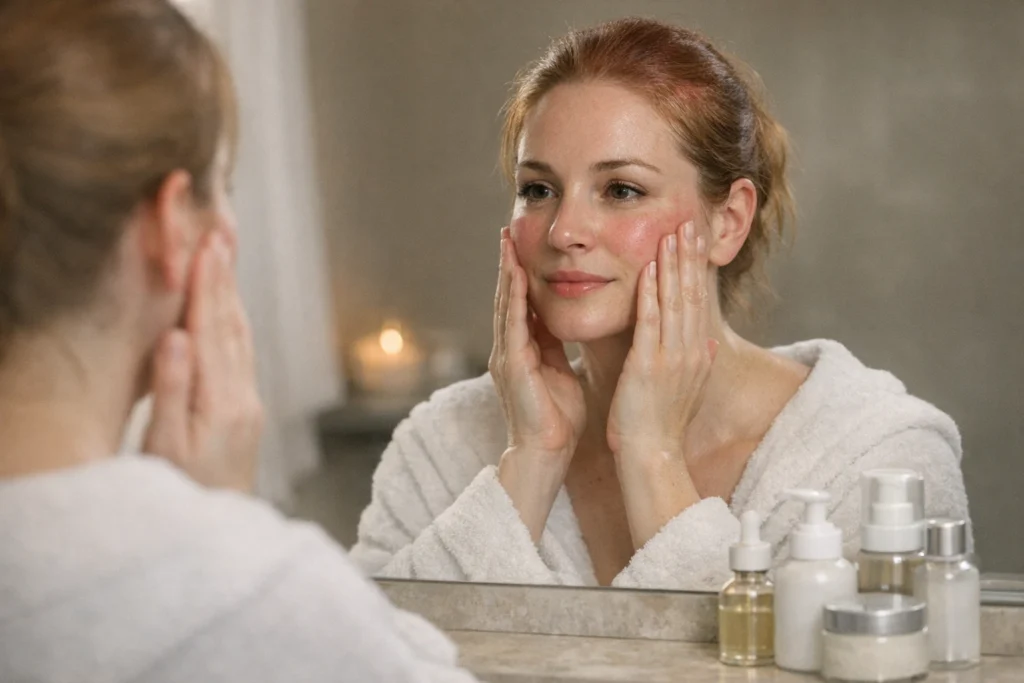
At the consultation, someone said “no downtime.” That is technically true. You can go back to work. What you cannot do is apply makeup, wear sunscreen with actives, exercise, drink alcohol, or wash your hair (if it was your scalp that was treated) for anywhere from 24 to 48 hours. PRP aftercare is short. It is also specific. And the bigger recovery issue is not the first 48 hours at all, it is managing what happens over the next several months when the results you were promised arrive very slowly, or when your hair starts shedding more in week three and you are certain the treatment has backfired.
Quick Answer
PRP aftercare involves 24 to 48 hours of avoiding makeup, heat, sweat, alcohol, and active skincare ingredients. Most patients return to normal daily activities the same day or next day. Hair PRP patients should expect possible temporary shedding in the first weeks as a normal part of follicle cycling. Results build slowly: skin improvement takes weeks to months; hair density changes take 3 to 6 months of consistent treatment to appear.
Jump to: Frequently Asked Questions
The First 48 Hours After Facial PRP
Redness, pinpoint bleeding at injection sites, mild swelling, and sensitivity are all expected immediately after facial PRP. Under-eye treatments produce the most visible swelling and bruising, sometimes lasting 7 to 14 days. If your injector used numbing cream, you may also notice slight surface irritation from that separately.
No makeup for at least 24 hours. This applies even if you feel fine and the redness looks minor. The injection sites are open and the risk of introducing bacteria or blocking the healing process is real. Most providers extend this to 48 hours for caution. Same logic applies to skincare actives: no retinol, acids (AHAs/BHAs), or vitamin C for at least 48 hours. These ingredients can irritate compromised skin and disrupt the healing environment the plasma needs.
No exercise for at least 48 hours, and some providers recommend waiting a full week for intense workouts. The reason: sweating immediately after injection can irritate the sites and potentially affect how the plasma absorbs. No alcohol for 3 to 7 days, as it causes vasodilation and inflammation. Keep things boring. Plain barrier moisturiser and SPF on day two and nothing else.
Speaking of SPF: after PRP, a simple mineral sunscreen is what your skin actually needs. The market for “PRP-specific” serums and aftercare kits marketed alongside these treatments is largely noise. A basic barrier moisturiser and broad-spectrum SPF 30 or higher will serve you better than any specialised post-PRP kit at three times the price. Nobody will tell you this at the clinic, because they are selling the kit.
Hair PRP Aftercare: The Shedding Phase Nobody Mentions
Scalp tenderness, tightness, and pinpoint redness at injection sites are expected for 1 to 2 days after hair PRP. Most providers allow normal shampooing the same day or the following day. Avoid harsh chemical treatments, including hair dye, until your provider clears it.
Now, the part that is almost never communicated clearly: some patients experience increased hair shedding in the weeks following treatment. This is a known pattern and it is part of the natural follicle cycling process, not a sign the treatment failed. PRP stimulates dormant follicles, which can trigger a shedding phase as the follicle resets before entering a new growth cycle.
Patients who were warned about this handle it. Patients who were not warned consistently stop treatment, which means they never reach the point where it works. If you are three weeks post-treatment and losing more hair than usual, contact your provider, but know that this is a documented and expected pattern. It typically resolves on its own.
PRP with Microneedling vs. PRP Injection Only
The surface experience differs significantly depending on how the PRP was delivered. If your PRP was applied during or after microneedling, you are dealing with a mechanically disrupted skin barrier in addition to the plasma. Expect more visible redness and a rough or dry skin texture for 3 to 5 days as the surface heals. The microneedling aftercare guide covers the specific skin barrier considerations in detail.
Pure PRP injection, without microneedling, produces less surface disruption. The redness is more localised and typically resolves within 24 hours. However, you may see more concentrated bruising and swelling at injection sites that can last 1 to 2 weeks in some cases. The difference is less widespread irritation but more localised visible aftermath.
If your provider used copper peptides as part of your post-procedure skincare, the copper peptides after microneedling guide explains when and how to reintroduce them into your routine after any procedure that compromises the skin barrier.
PRP Aftercare Results Timeline: The Honest Version
This is the part most clinics handle vaguely. Early visible improvement in skin quality, texture, and hydration begins appearing at around 3 to 6 months for most patients. Hair density changes follow a similar arc: early signs like reduced shedding and improved hair quality can appear in that same 3 to 6 month window, but meaningful density changes require multiple sessions and a longer commitment.
| Timeframe | What to Expect |
|---|---|
| First 24 hours | Redness, sensitivity, pinpoint bleeding or bruising. No makeup, no heat, no exercise. |
| 24 to 48 hours | Most surface redness resolves. Gentle cleanser and SPF only. Avoid active ingredients. |
| Days 3 to 5 (microneedling combo) | Skin may feel rough or dry as it heals. Normal turnover. No actives yet. |
| Weeks 1 to 4 (hair PRP) | Possible temporary shedding. Expected. Part of follicle cycling, not failure. |
| Months 3 to 6 | Early visible improvement in skin quality or reduction in hair shedding. |
| Months 6 to 12 | More meaningful changes in hair density or skin texture. Multiple sessions required for best results. |
Standard protocol for PRP is 3 to 4 initial sessions spaced 3 to 4 weeks apart, followed by maintenance sessions every few months. Results for facial PRP can last up to 18 months. Anyone quoting faster or more dramatic timelines is overselling. The honest answer is: this is a slow treatment that rewards patience and consistent sessions, not a quick fix.
What Is Normal and What Warrants a Call
PRP has antimicrobial properties, which makes serious infection uncommon. Most concerns in the first 48 hours are normal. The distinction between “this is expected” and “something is wrong” comes down to timing and direction: things should be improving, not worsening, after day three.
Normal
- Redness and swelling lasting 24 to 48 hours
- Pinpoint bleeding at injection sites
- Scalp tenderness for 1 to 2 days (hair PRP)
- Temporary increased hair shedding in weeks 1 to 4
- Bruising at injection sites lasting up to 2 weeks
Call Your Provider
- Redness or swelling that worsens after day 3
- Fever or signs of infection at any injection site
- Bruising spreading well beyond the injection area
- Headache that does not resolve within 24 hours
Frequently Asked Questions
When can I wash my face after PRP?
For facial PRP injections, most providers recommend waiting at least 6 to 8 hours before gently cleansing, and avoiding any active skincare ingredients for 48 hours. For PRP combined with microneedling, the timeline is similar, but the skin barrier is more disrupted so gentle handling matters more. Lukewarm water and a fragrance-free, non-active cleanser are the safest choices in the first 48 hours.
Why is my hair shedding more after PRP hair treatment?
Increased shedding in the weeks following hair PRP is a known and expected part of the follicle cycling process. PRP stimulates dormant follicles, which can trigger a brief shed as the follicle enters a new growth phase. This is not the treatment failing, it is the opposite. Most patients who were warned about this stay the course. If shedding seems extreme or lasts beyond 6 weeks, contact your provider.
How many PRP sessions do I need to see results?
The standard initial course is 3 to 4 sessions spaced 3 to 4 weeks apart. Results for facial PRP can last up to 18 months. For hair PRP, meaningful density changes typically require the full initial course plus maintenance sessions. Expecting visible improvement after one session, especially for hair, sets the treatment up to look like it failed when it is simply not done yet.
This article is for educational purposes only and is not a substitute for professional medical advice. Always follow your injector’s or surgeon’s specific aftercare instructions.