
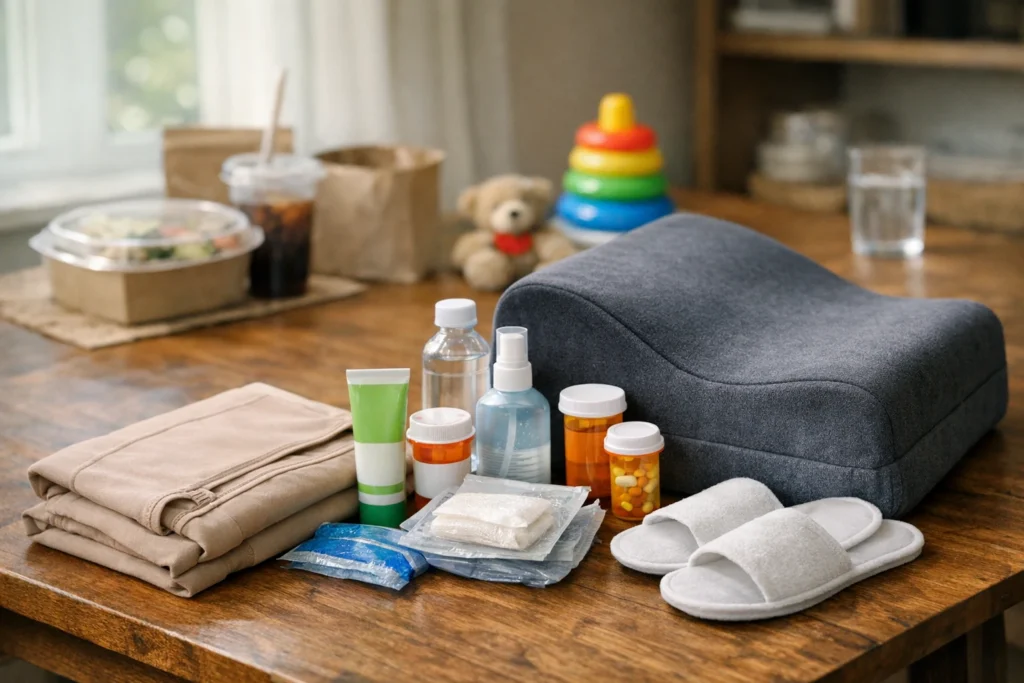
The number on your surgical quote is not what cosmetic surgery costs. That figure covers the surgeon’s fee, the anesthesia, and the facility. It does not cover the compression garment you’ll need after the first one gets soaked through. It does not cover the lymphatic massage sessions your surgeon recommends twice a week for six weeks. It does not cover the arnica gel, the scar silicone, the specialty pillow, the food delivery because you can’t lift grocery bags, or the childcare because you can’t lift your toddler either. Recovery costs are the part of the budget that nobody at the consultation mentions, because clinics have no financial incentive to make recovery sound expensive. This article builds the breakdown that patients consistently wish they had seen before they booked.
Jump to the FAQ section for quick answers on how to estimate your personal recovery budget.
Quick Answer
Recovery costs for surgical procedures typically run $600 to $2,200 above the quoted procedure price, depending on treatment area and how many lymphatic massage sessions your surgeon recommends. For the full procedure volume and cost data behind these figures, see our full cosmetic recovery data page. Injectables and lighter skin treatments carry minimal recovery costs. The biggest variables are massage therapy volume, time off work for hourly or self-employed patients, and logistical expenses during mobility restriction weeks.
How to Read This Table: Methodology and What the Ranges Actually Mean
The cost ranges below reflect typical out-of-pocket recovery expenses beyond what is included in the surgical fee. Compression garments provided by the clinic at no charge are noted; the figures here cover what patients typically purchase additionally. Massage and therapy costs assume mid-range session pricing of $75 to $150 per session, which is the realistic market range in most U.S. metro areas. Prescription-related costs vary by provider and patient, so those columns note the budget category rather than a firm number. Time off work is noted qualitatively since hourly wage loss is impossible to generalize.
A note on what is not included: nobody can calculate your lost wages, your childcare backup plan, or the cost of the replacement wardrobe items you’ll need while wearing compression for four to six weeks. Those are real expenses and they get their own section below the table.
The Recovery Cost Breakdown Table: Eight Procedure Groups, No Rounding Up
| Procedure | Compression Garment Cost | Massage / Therapy Cost | OTC Recovery Products | Prescription-Related | Time Off Work Note | Realistic Recovery Add-On Total |
|---|---|---|---|---|---|---|
| Liposuction (standard / 360) | Stage 1 faja often included in surgery fee. Stage 2 faja out of pocket: $80-$200. Lipo foam and ab boards: $20-$60. | Lymphatic drainage: $75-$150/session. Most surgeons recommend 6-12 sessions in first 6 weeks. Total: $450-$1,800. | Arnica, scar products: $30-$80 | Budget for it; varies by provider | Desk work: 1-2 weeks. Physical work: 4-6 weeks. | ~$600-$2,200 |
| BBL (Brazilian Butt Lift) | Same as lipo above. BBL pillow: $30-$80. | Same lymphatic drainage recommendation as lipo. $450-$1,800. | Arnica, scar products: $30-$80 | Budget for it; varies by provider | Sitting restrictions create real logistical costs. Remote work ergonomics require workarounds for the first 2 weeks. | ~$650-$2,300 |
| Tummy Tuck (Abdominoplasty) | Faja and compression: $80-$200. Ab board and lipo foam if not included: $20-$60. | Often requires longer massage course than lipo alone. $450-$1,800+. | Arnica, scar products, drain supplies early recovery: $40-$100 | Drain management supplies; prescription meds. Budget for it. | Desk work: 2-3 weeks. Physical work: 6-8 weeks. | ~$700-$2,300 |
| Facelift | No standard compression garment. Facial wrap first week typically provided by clinic. | Post-op lymphatic facial massage increasingly common: $75-$150/session, typically 3-6 sessions. $225-$900. | Arnica, scar products, makeup to cover bruising: $50-$150 | Budget for it; varies by provider | Desk work: 10-14 days. Social settings: ~2 weeks. | ~$300-$1,100 |
| Rhinoplasty | None applicable. | Minimal. Lymphatic facial massage sometimes recommended. $0-$300. | Arnica, scar products for incision sites (open rhino): $30-$60 | Budget for it; varies by provider | Extended leave is the dominant hidden cost. Subtle swelling lasts months; many patients extend time off unexpectedly. | ~$100-$500 (not counting extended leave) |
| Breast Augmentation | Surgical bra often included. Out of pocket if not: $30-$80. | Lymphatic massage not standard for breast aug. $0-$150. | Arnica: $20-$40 | Budget for it; varies by provider | Desk work: 3-5 days. Lifting restrictions create real logistical costs for patients with dependents. | ~$100-$400 (not counting logistical costs) |
| Botox / Dermal Filler | None. | None. | Arnica optional: $10-$25 | N/A | Near-zero. Most patients return to normal activity same day or next day. | ~$10-$25 |
| Microneedling / Chemical Peels | None. | None. | Mineral SPF, barrier repair products: $40-$120 | N/A | Social downtime: 3-10 days depending on depth. Most patients can work through it. | ~$40-$120 |
Liposuction and BBL: Where Lymphatic Massage Is the Budget Line That Catches Everyone
Lymphatic drainage massage is the single largest variable in body contouring recovery budgets, and it is almost never mentioned during the sales conversation. Most surgeons recommend six to twelve sessions in the first six weeks post-lipo, at a per-session cost of $75 to $150 depending on your market. That is $450 to $1,800 in massage alone, and that range assumes you actually complete the full course. Patients who skip sessions to save money are frequently the ones dealing with prolonged firmness, lumps, and fluid retention that requires even more follow-up. It is not optional in the way that a vitamin supplement is optional.
For the compression side: most surgeons provide a Stage 1 faja as part of the surgical fee. The Stage 2 faja, which you transition to around week three or four, is typically an out-of-pocket purchase. You can find what to look for in our Stage 1 vs. Stage 2 faja guide. The lipo foam and ab boards are separate, usually $20 to $60 combined. Our breakdown of abdominal boards vs. lipo foam walks through which combination is needed for which procedure.
BBL adds the pillow. This is the item that patients sometimes find unnecessary until they are three days post-op and realize that sitting without it for two weeks is not actually an option. Budget $30 to $80. Also budget for remote-work ergonomic solutions if you work a desk job and need to avoid direct sitting pressure on the treated area for the first couple of weeks.
Tummy Tuck: The Procedure With the Longest Hidden Cost Tail
Tummy tucks carry the longest recovery arc of any body contouring procedure, and the recovery costs reflect that. Drainage tubes in the early days require supplies: gauze, wound care products, drain management tools that your surgeon will specify. These are not typically provided in unlimited supply at discharge. Compression wear mirrors the lipo cost range, and the massage course is often longer than for lipo-only patients because the tissue disruption is more extensive.
The physical work return timeline of six to eight weeks is also the most severe in this category, meaning hourly and self-employed patients face the largest income gap of any procedure group. If you are budgeting for a tummy tuck and you have not yet modeled the income loss, that number belongs in the spreadsheet before anything else.
Facelift and Rhinoplasty: Different Cost Profile, Same Surprise Factor
Facelift recovery costs are lower in absolute terms than body contouring, but the surprise factor is high because patients do not expect significant out-of-pocket recovery expenses for a facial procedure. The category to watch is post-operative lymphatic facial massage, which is increasingly recommended by surgeons and carries the same per-session pricing as body massage ($75 to $150). Three to six sessions is the typical recommendation. Add scar products for incision lines, arnica for bruising, and cosmetic coverage products if you are returning to social or professional settings before the two-week mark, and the facelift recovery budget lands between $300 and $1,100.
Rhinoplasty has the lowest direct recovery product cost of any surgical procedure, with the main out-of-pocket items being arnica and, for open rhinoplasty patients, scar treatment for the columella incision. The category where rhinoplasty quietly becomes expensive is time off work. Subtle swelling in the nose can persist for months, and many patients do not anticipate how much this affects their willingness to return to client-facing or high-visibility roles. This is the procedure where lost income most frequently exceeds direct product costs.

The Four Hidden Costs That Never Appear in Any Budget Template
Four cost categories appear consistently in patient accounts and never appear on the lists clinics hand out at discharge.
Food delivery is the first. During the first week or two post-lipo or post-tummy tuck, grocery shopping and cooking are not realistic options. Patients who live alone or whose household support is limited end up ordering in daily. That cost is invisible in any recovery budget template but it is real.
Childcare is the second, and it affects a specific patient group severely. Lifting restrictions after liposuction, BBL, and breast augmentation are not suggestions. A patient who cannot lift more than a few pounds cannot pick up a toddler. If there is no partner or family member covering that gap, paid childcare fills it. For some patients, this cost exceeds every other recovery line item combined.
Lost income for hourly and self-employed workers is the third. A desk job employee taking two weeks of PTO absorbs that cost invisibly. An hourly worker, a freelancer, or anyone paid by the project does not have that option. Budget the specific dollar figure of your income loss for the full recovery period, not just the first week.
Replacement clothing is the fourth. Compression garments change the silhouette under clothing significantly. For four to six weeks, patients frequently cannot wear fitted waistbands, tight jeans, or anything that sits directly on incision lines. For patients who need to present professionally during partial recovery, this means a modest but real wardrobe spend on items that accommodate the garment.
The Overhyped Recovery Product Problem: What You Can Skip
There is an entire product category built on the surgical patient’s anxiety, and it deserves a direct mention. “Post-op serums,” “surgical recovery complexes,” and products marketed specifically as clinical-grade recovery formulas are frequently standard gentle moisturizers with clinical packaging and prices to match. The active ingredients in most of them, ceramides, hyaluronic acid, niacinamide, are available in well-formulated drugstore products at a fraction of the cost. The packaging is not the ingredient list.
Similarly, “surgical-grade” arnica products typically contain the same arnica concentration as standard pharmacy arnica gel. The word “surgical” is a marketing designation, not a regulatory one. For a detailed look at evidence-based options without premium markup, the recovery tools section covers what the research actually supports.
The products worth spending on are: your correctly fitted compression garment, the lymphatic massage sessions your surgeon recommends (these have real functional impact on outcome), a quality mineral SPF if your procedure involved the face or skin surface, and a silicone scar product for incision sites once they have fully closed. Everything else is worth evaluating against the ingredient label, not the price tag.
How to Build a Realistic Recovery Budget Before You Book
The most useful thing you can do at your consultation is ask two specific questions: what compression garments are included in my fee, and what is your lymphatic massage recommendation for my procedure? Those two answers give you the frame for your recovery budget.
From there, work through the table above for your specific procedure group. Then add the four hidden cost categories: food support during restricted mobility, childcare if applicable, income loss for your full recovery period, and any clothing accommodation you will need. Add a 20 percent buffer for the items you have not anticipated yet, because there are always items you have not anticipated yet.
The patients who feel most financially blindsided post-surgery are not the ones who overspent on the procedure. They are the ones who budgeted for the surgery and forgot to budget for the recovery. The procedure gets you to day one. Recovery gets you to the result.
Frequently Asked Questions
Is lymphatic drainage massage after lipo actually necessary, or is it optional?
Clinically, lymphatic drainage massage after liposuction helps reduce fluid accumulation, soften early fibrosis, and speed the resolution of swelling. Most surgeons recommend it, and patients who complete the recommended course tend to have smoother results than those who skip sessions. The word “optional” is technically accurate in that no one will force you to go, but the cost of skipping can show up in your result. Budget it as a required line item unless your surgeon specifically tells you it is not needed for your case.
Why doesn’t my surgeon’s office mention recovery costs at the consultation?
Clinics quote procedure costs, not lifestyle costs. The recovery spending happens across multiple vendors: massage therapists, pharmacies, garment retailers. There is no malicious intent in most cases; the information just does not live in the workflow that consultation coordinators follow. This is why independent recovery resources exist: to fill that gap without a sales incentive attached.
Can I reduce recovery costs without compromising my result?
Yes, within reason. You can save on recovery products by choosing well-formulated basics over procedure-branded equivalents. You can reduce logistical costs by planning your support system early: identifying family members who can help, meal prepping before surgery, arranging childcare coverage in advance. Where you should not cut costs: compression garment quality for body contouring procedures, and the lymphatic massage sessions your surgeon recommends. Those have direct impact on outcomes. Everything else is negotiable.
This article is for educational purposes only and is not a substitute for professional medical advice. Always follow your injector’s or surgeon’s specific aftercare instructions.